The Role of Property Management in Multifamily Investment Success
Multifamily real estate has become a popular investment option because it offers the potential for steady rental income, portfolio growth, and long-term appreciation. However, owning a multifamily property involves much more than collecting rent. Daily operations, tenant relationships, maintenance, financial oversight, and legal responsibilities all influence the property’s performance. Professional property management helps handle these responsibilities efficiently, allowing investors to protect their assets, improve tenant satisfaction, and support long-term investment success. A well-managed property attracts quality tenants, reduces unnecessary expenses, and helps protect the value of the investment over time.
What Is Property Management in Multifamily Real Estate
Property management in multifamily real estate refers to the professional oversight of residential properties with multiple rental units. The goal is to maintain the property, improve tenant satisfaction, and maximize the owner’s return on investment through efficient day-to-day operations.
Property managers oversee responsibilities such as tenant screening, lease administration, rent collection, maintenance coordination, financial reporting, vendor management, and regulatory compliance. Their expertise allows property owners to focus on investment growth while ensuring the property continues to operate efficiently.
Why Property Management Is Essential for Multifamily Investment Success
Improves Tenant Satisfaction and Retention
Happy tenants are more likely to renew their leases, reducing vacancy rates and turnover costs. Professional property management ensures residents receive prompt responses to maintenance requests, clear communication, and reliable support throughout their tenancy.
Strong tenant relationships create a positive community atmosphere while minimizing disputes.
Maximizes Rental Income
Effective property management helps property owners generate consistent rental income by keeping occupancy levels high and ensuring rental rates remain competitive. Market research and regular property evaluations allow managers to set appropriate pricing that reflects current demand.
By minimizing vacant units and maintaining strong tenant relationships, multifamily properties can achieve healthier cash flow over the long term.
Controls Operating Expenses
Managing operating costs is essential for maintaining profitability. Professional property managers carefully monitor expenses while implementing preventive maintenance programs that reduce the likelihood of expensive emergency repairs.
These practices help improve efficiency while ensuring that maintenance quality remains high without unnecessary spending.
Protects Property Value
Regular maintenance plays an important role in preserving the condition and value of a multifamily property. Routine inspections help identify small issues before they become costly structural problems, allowing repairs to be completed promptly.
Well-maintained landscaping, clean common areas, updated amenities, and properly functioning building systems create a positive impression for both current and prospective tenants.
Ensures Legal and Regulatory Compliance
Multifamily property owners must comply with numerous housing regulations, lease requirements, safety standards, and financial obligations. Professional property management helps reduce legal risks by ensuring documentation is accurate and policies are applied consistently.
Staying informed about changing regulations also helps prevent unnecessary legal disputes and financial penalties.
Provides Accurate Financial Reporting
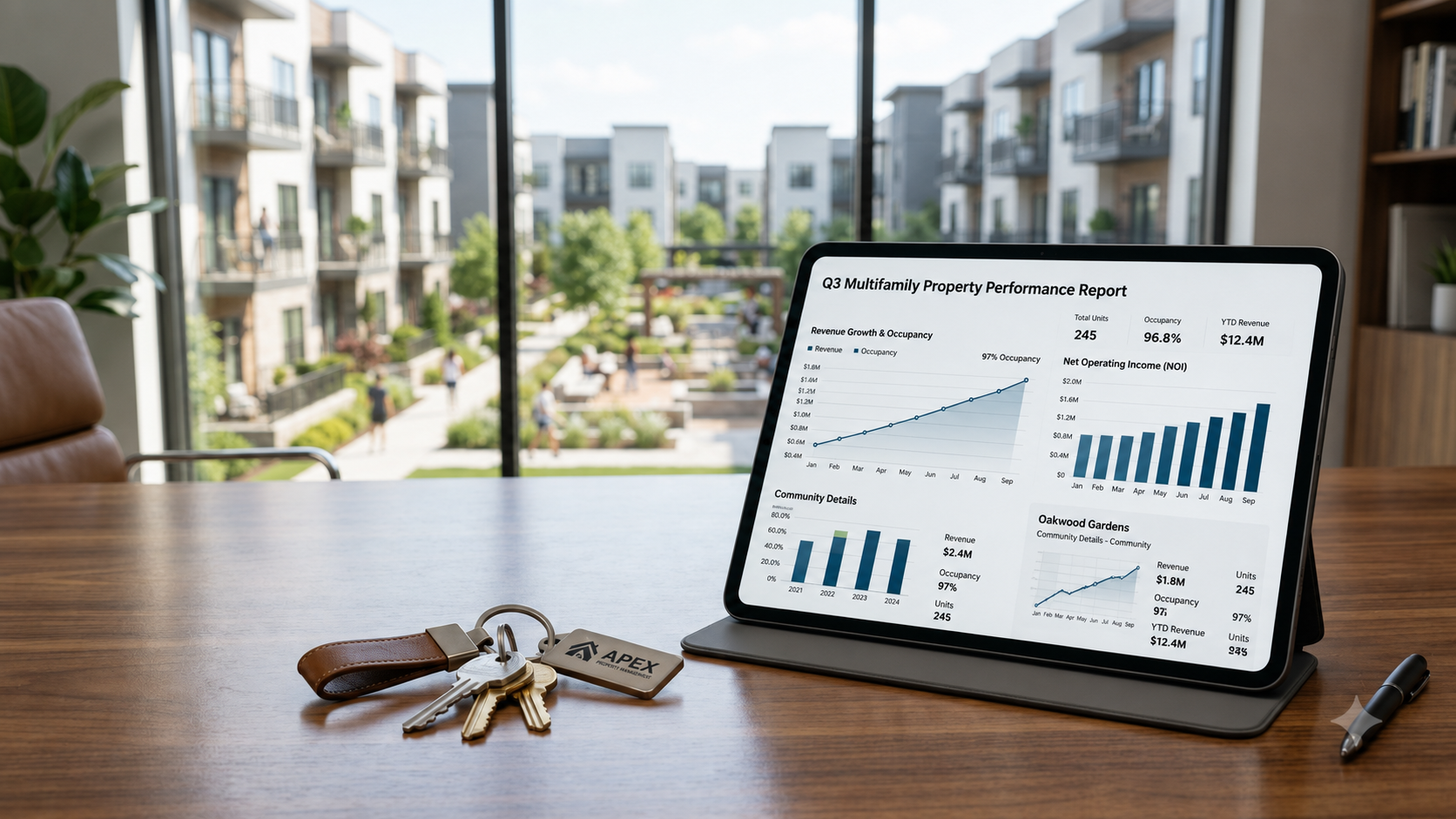
Reliable financial reporting allows investors to evaluate property performance and make informed business decisions. Property managers prepare detailed reports covering rental income, operating expenses, maintenance costs, occupancy rates, and overall profitability.
Clear reporting also helps identify opportunities to improve operational efficiency and increase returns.
How Professional Property Management Supports Long-Term Investment Growth
Long-term success in multifamily investing depends on consistent operational performance. Professional property management contributes to sustainable investment growth by delivering several important advantages:
- Maintaining high occupancy rates through effective marketing, tenant retention, and professional leasing practices.
- Supporting stable cash flow by reducing vacancies, collecting rent efficiently, and controlling operating expenses.
- Protecting assets with preventive maintenance programs that reduce costly repairs and extend the life of building systems.
- Improving operational efficiency through organized financial management, vendor coordination, and ongoing property oversight.
- Strengthening investor confidence by providing transparent reporting and consistent property performance.
Investors seeking professionally managed multifamily opportunities can benefit from working with experienced firms such as Bighorn Capital Fund. By combining strategic investment planning with effective property management practices, Bighorn Capital Fund focuses on maximizing operational performance, protecting asset value, and creating long-term growth opportunities for investors.
Conclusion
Property management plays a vital role in the success of multifamily real estate investments. From improving tenant satisfaction and increasing rental income to controlling expenses and maintaining legal compliance, professional management supports every aspect of property performance. A well-managed property is better positioned to generate stable cash flow, preserve its value, and achieve sustainable long-term returns.
Frequently Asked Questions
Why is property management important for multifamily investments?
Professional property management helps improve occupancy, reduce operating costs, and maintain property value.
How does property management improve tenant retention?
Property managers respond quickly to maintenance requests, maintain clear communication, and create a positive living environment.
Can professional property management increase rental income?
Yes. Property managers help reduce vacancies, establish competitive rental rates, and improve rent collection processes.
How does property management help reduce operating costs?
Preventive maintenance, budget planning, and efficient vendor management help minimize unnecessary expenses.
What financial reports should investors receive from property managers?
Property managers typically provide reports covering rental income, operating expenses, occupancy rates, maintenance costs, and overall financial performance.